How to Rank When Competitors Have 10X More Backlinks
Outrank competitors with fewer backlinks using smart SEO strategies. Learn how to leverage content quality, technical optimization, and user experience to win.

Looking at your competitor's backlink profile can be intimidating. They have thousands of referring domains while you're sitting at a few dozen. It feels impossible to compete but here's the truth: backlinks aren't everything.
I've helped businesses rank above competitors with 10 times more backlinks by focusing on factors Google increasingly prioritizes: content quality, user experience, topical authority, and technical excellence. While backlinks remain important, they're just one piece of a much larger puzzle.
In this comprehensive guide, I'll show you exactly how to overcome a backlink gap and achieve rankings that seem impossible based on link count alone. These are proven strategies that work in real-world competitive scenarios.
Understanding the Backlink Gap Reality
What Is a Backlink Gap?
A backlink gap refers to the difference in the number and quality of backlinks between your website and your competitors. If your competitors have 5,000 backlinks and you have 500, you're facing a significant backlink gap.
However, understanding this gap requires nuance. Not all backlinks are created equal:
- Quality beats quantity: One link from a major industry publication outweighs dozens of low-quality directory links
- Relevance matters: Industry-specific backlinks carry more weight than generic ones
- Link velocity counts: Natural, steady growth signals legitimacy better than sudden spikes
- Anchor text diversity: Varied, natural anchor text patterns look more authentic
Why You Can Still Win With Fewer Backlinks
Google's algorithm has evolved significantly. While backlinks remain a crucial ranking factor, Google now evaluates hundreds of signals to determine rankings:
- Content quality and comprehensiveness
- User engagement metrics (bounce rate, time on site, pogo-sticking)
- Page experience signals (Core Web Vitals)
- Topical authority and entity relationships
- Search intent satisfaction
- Technical SEO health
- Mobile-friendliness and accessibility
This diversification means websites with superior execution across these factors can outrank those relying primarily on backlink volume. I've seen this firsthand through SEO services projects where smaller sites consistently beat industry giants.
Strategy 1: Create Superior Content That Naturally Attracts Links
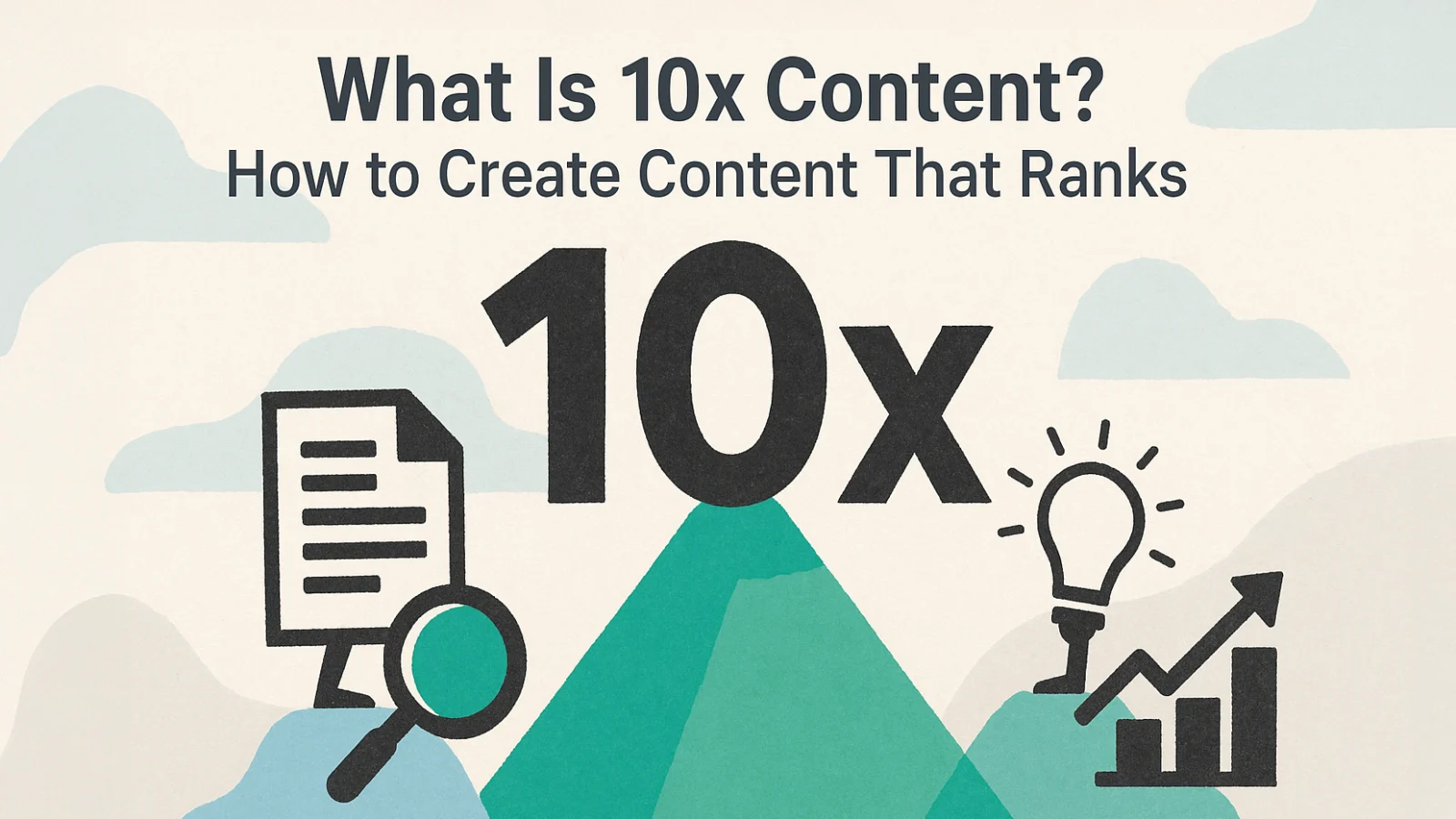
Go 10X Deeper Than Competitors
If competitors have more backlinks, you need better content. But "better" doesn't mean longer it means more valuable.
How to create 10X content:
- Conduct original research: Publish proprietary data, surveys, or case studies that become the reference source in your industry
- Provide actionable frameworks: Give readers step-by-step processes they can implement immediately
- Include multimedia elements: Add videos, infographics, interactive calculators, or tools that enhance understanding
- Update regularly: Keep content current with the latest information, statistics, and examples
- Cover the topic exhaustively: Answer every question a user might have about the subject
For example, instead of writing "10 SEO Tips," create "The Complete Technical SEO Implementation Guide: 47 Checks, Tools, and Fixes" with detailed explanations, screenshots, and downloadable checklists. This type of content writing naturally attracts links because it becomes the definitive resource.
Target Long-Tail Keywords With Less Competition
Don't fight battles you can't win. If competitors dominate broad, high-volume keywords with their backlink advantage, target specific long-tail variations where content quality matters more.
Long-tail targeting strategy:
- Use keyword research to find queries with decent volume but lower competition
- Focus on question-based keywords showing clear search intent
- Target "best for [specific use case]" rather than just "best"
- Create content for each stage of the buyer's journey
- Build topical clusters around niche subtopics
For instance, instead of targeting "CRM software" (highly competitive), target "best CRM software for real estate teams under 10 people" (more specific, less competition).
Leverage Content Formats That Earn Links Naturally
Certain content types attract backlinks more effectively:
High-linkability content formats:
- Original research and data studies: Industry statistics, trend reports, benchmark studies
- Comprehensive guides and tutorials: In-depth how-to content that serves as the ultimate reference
- Tools and calculators: Interactive resources that solve specific problems
- Infographics and visual data: Shareable visual representations of complex information
- Case studies with real results: Detailed documentation of strategies and outcomes
- Expert roundups: Curated insights from multiple industry authorities
Consider creating resources like top free SEO tools lists or comprehensive technical SEO checklists that naturally earn citations.
Strategy 2: Dominate Through Topical Authority
Build Comprehensive Content Clusters
Google increasingly rewards topical expertise over random collections of content. Demonstrate authority by creating interconnected content clusters:
Content cluster framework:
- Pillar page: Comprehensive overview of the main topic (e.g., "Complete Guide to Local SEO")
- Cluster content: Detailed articles covering specific subtopics (e.g., "Google Business Profile Optimization," "Local Citation Building," "NAP Consistency")
- Strategic interlinking: Connect cluster content to pillar pages and related articles
- Semantic relationship: Use consistent terminology and related entities throughout
This structure signals to Google that you're an authority on the topic, even without massive backlink counts. It's a strategy I implement extensively in programmatic SEO projects.
Cover Topics Comprehensively, Not Just Keywords
Move beyond keyword optimization to entity-based SEO:
- Identify related entities (people, places, concepts) connected to your topic
- Include these entities naturally throughout your content
- Create content addressing all aspects of the topic ecosystem
- Use schema markup to help Google understand entity relationships
- Build internal links between semantically related content
For example, an article about ecommerce SEO should naturally discuss related entities like product schema, shopping feeds, category optimization, and conversion rate optimization all interconnected through strategic internal linking.
Become the "Go-To" Resource for Specific Niches
Rather than competing broadly, dominate a specific niche:
- Choose an underserved segment of your market
- Create every piece of content that segment needs
- Engage directly with that community
- Build relationships with niche influencers
- Position yourself as the specialist, not a generalist
Specialists often outrank generalists because their depth of expertise is evident in content quality, even with fewer overall backlinks.
Strategy 3: Optimize Technical SEO to Maximum Potential
Perfect Your Core Web Vitals
Page experience signals directly impact rankings. If competitors ignore technical performance, you can gain significant advantage:
Core Web Vitals optimization:
- Largest Contentful Paint (LCP): Target under 2.5 seconds by optimizing images, implementing lazy loading, and using a CDN
- First Input Delay (FID): Minimize JavaScript execution, defer non-critical scripts, and reduce third-party code
- Cumulative Layout Shift (CLS): Set size attributes for images and ads, avoid inserting content above existing content
- Interaction to Next Paint (INP): Optimize event handlers and reduce main thread blocking
Use tools like Google PageSpeed Insights and Lighthouse to identify specific improvements. Strong technical SEO can overcome backlink deficits because Google prioritizes user experience.
Implement Advanced Schema Markup
Structured data helps Google understand your content better, potentially leading to rich results that increase visibility:
Strategic schema implementation:
- Article schema: Enhance how your content appears in search results
- FAQ schema: Increase SERP real estate with expandable questions
- HowTo schema: Get step-by-step formatting in search results
- Product schema: Display ratings, prices, and availability (for ecommerce)
- Review schema: Show star ratings in search results
- Local business schema: Enhance local search presence
Learn more about schema markup implementation to maximize your technical advantage.
Fix All Technical Issues Competitors Ignore
Many high-authority sites have technical debt they neglect. Capitalize on this:
Technical optimization checklist:
- Fix all broken links and redirect chains
- Eliminate duplicate content issues
- Optimize crawl budget by blocking unnecessary pages
- Implement proper canonicalization
- Create and maintain clean XML sitemaps
- Ensure proper robots.txt configuration
- Fix mobile usability issues
- Implement proper internal linking structure
- Optimize URL structure for clarity and hierarchy
Use my website audit checklist to systematically identify and fix technical issues.
Strategy 4: Focus on User Experience and Engagement
Optimize for User Intent, Not Just Keywords
Google tracks how users interact with search results. If your page satisfies intent better than competitors, you'll rank higher despite fewer backlinks:
Intent optimization strategies:
- Analyze the current top 10 results to understand what Google rewards
- Identify the primary intent (informational, navigational, commercial, transactional)
- Structure content to address that intent immediately
- Provide the most direct answer upfront
- Include supporting information for users who want to dive deeper
- Add clear calls-to-action matching the intent stage
For example, someone searching for "best project management software" wants comparisons and recommendations, not a definition of project management.
Improve Engagement Metrics
Google uses behavioral signals to validate content quality:
Engagement optimization tactics:
- Reduce bounce rate: Deliver on the promise of your title and meta description
- Increase time on page: Add engaging multimedia, break up text with visuals, use compelling subheadings
- Encourage page depth: Include relevant internal links to related content
- Improve readability: Use short paragraphs, bullet points, and clear formatting
- Add interactive elements: Include calculators, quizzes, or tools that require engagement
These signals tell Google your content satisfies users better than competitors, justifying higher rankings.
Create Outstanding Mobile Experiences
Over 60% of searches happen on mobile devices. Mobile optimization can be your competitive advantage:
Mobile optimization essentials:
- Implement responsive design that adapts to all screen sizes
- Optimize touch targets (buttons and links) for finger navigation
- Simplify navigation for thumb-friendly browsing
- Minimize pop-ups and interstitials that frustrate mobile users
- Ensure text is readable without zooming
- Optimize images for mobile loading speeds
- Test on actual devices, not just desktop simulators
Excellent mobile experience can help you outrank desktop-optimized competitors, especially for mobile searches.
Strategy 5: Leverage Internal Linking Strategically
Build a Powerful Internal Link Structure
Internal links distribute authority throughout your site and signal topical relationships:
Internal linking best practices:
- Link from high-authority pages to pages you want to rank
- Use descriptive, keyword-rich anchor text naturally
- Create a logical site hierarchy with clear pathways
- Implement breadcrumb navigation
- Add contextual internal links within content
- Create content hubs that organize related topics
- Ensure every important page is within 3 clicks of the homepage
Strategic internal linking can make individual pages more competitive without external backlinks. This is particularly effective for local SEO strategies where site architecture matters significantly.
Create Content That Links to Your Priority Pages
Support important pages with related content that naturally links to them:
- Write supporting articles that reference your main commercial pages
- Create educational content that leads to service pages
- Build comparison pages that highlight your solutions
- Develop case studies that link to relevant service descriptions
- Use blogs to reinforce product and service page authority
This internal link equity can partially compensate for backlink deficiencies.
Strategy 6: Earn High-Quality Links Strategically
Focus on Quality Over Quantity
Since you can't match competitor link volume, prioritize link quality:
High-value link targets:
- Industry-specific publications and journals
- Government and educational institutions (.gov, .edu domains)
- Major news outlets and media publications
- Industry association websites
- High-authority blogs and resources in your niche
- Relevant podcasts and YouTube channels
A single link from a major industry publication can provide more value than 100 low-quality directory links. Focus your backlink building efforts on these high-impact opportunities.
Use Digital PR and Content Marketing
Generate links through strategic outreach and valuable content:
Effective link earning tactics:
- Original research: Publish data studies that journalists and bloggers cite
- Expert commentary: Offer quotes and insights to journalists via HARO or similar services
- Guest posting: Write high-quality articles for authoritative sites in your industry
- Broken link building: Find broken links on authority sites and suggest your content as replacement
- Resource page outreach: Get listed on curated resource pages in your niche
- Podcast appearances: Get featured on industry podcasts that provide show notes links
Build Relationships Before Asking for Links
The most sustainable link building comes from genuine relationships:
- Engage with industry influencers on social media
- Comment thoughtfully on relevant blogs
- Participate in industry forums and communities
- Attend virtual and in-person industry events
- Offer value before asking for anything in return
- Collaborate on content projects
- Share and promote others' work genuinely
These relationships lead to natural link opportunities that are more valuable and sustainable than cold outreach.
Strategy 7: Target Keywords Where Backlinks Matter Less
Find Low-Competition, High-Value Keywords
Use advanced keyword research to identify opportunities where content quality trumps backlink count:
Keyword opportunity identification:
- Search for keywords with low Keyword Difficulty scores (under 30)
- Target questions and long-tail variations
- Look for emerging topics where authority isn't established yet
- Find keywords where current top results have weak content
- Target local modifiers if you serve specific geographic areas
- Focus on informational queries where user intent matters most
Tools like my keyword planner or backlink checker can help identify these opportunities.
Capitalize on Content Gaps
Find topics your competitors haven't covered comprehensively:
- Use competitor analysis tools to identify their weak spots
- Look for questions in "People Also Ask" sections they haven't answered
- Review competitor comments and social media for unmet needs
- Identify subtopics within main topics that lack thorough coverage
- Create content for different stages of the buyer journey they've ignored
By filling content gaps, you can rank for keywords where backlink competition doesn't yet exist.
Focus on Commercial Intent Keywords
While informational keywords often go to high-authority sites, commercial and transactional keywords reward relevance and conversion optimization:
- Target "best [product] for [specific use case]" queries
- Create comparison pages that directly address buying decisions
- Optimize product and service pages for commercial queries
- Focus on location-specific commercial terms
- Target "review" and "alternative" keywords
These keywords often convert better anyway, making them doubly valuable for businesses.
Real-World Success Story: Beating the Backlink Gap
Let me share a real example from my consulting work:
The Challenge: A boutique digital marketing agency wanted to rank for "content marketing services." Their top 5 competitors averaged 8,500 backlinks while they had just 740.
The Strategy: Rather than trying to match backlink volume, we focused on:
- Superior content: Created a comprehensive content marketing resource hub with 15 interconnected articles covering every aspect of content strategy
- Technical excellence: Achieved perfect Core Web Vitals scores and implemented advanced schema markup
- Niche positioning: Positioned as B2B SaaS content marketing specialists rather than general content services
- Long-tail domination: Targeted 47 specific long-tail variations instead of just the main keyword
- Strategic internal linking: Built a powerful internal link structure supporting priority pages
- High-quality link acquisition: Earned 28 highly relevant links from SaaS industry publications
The Results (After 5 Months):
- Ranked #4 for main keyword (up from position 43)
- Ranked in top 3 for 31 related long-tail keywords
- Increased organic traffic by 285%
- Generated 52 qualified leads from organic search
- Never matched competitor backlink counts (still at only 1,200 vs competitors' 8,500+)
This demonstrates that strategic execution across multiple ranking factors can overcome significant backlink disadvantages. Similar results are achievable through comprehensive SEO services that prioritize quality over pure link volume.
Tools for Analyzing and Overcoming Backlink Gaps
Essential SEO Tools
For backlink analysis:
- Ahrefs: Comprehensive backlink analysis and competitor research
- SEMrush: Link gap analysis and keyword opportunity identification
- Moz: Domain authority tracking and link quality assessment
- Majestic: Trust Flow and Citation Flow metrics
For content optimization:
- Surfer SEO: Content optimization based on top-ranking pages
- Clearscope: Topic coverage and entity optimization
- Frase: Content brief creation and optimization
For technical SEO:
- Google Search Console: Performance tracking and technical issue identification
- Screaming Frog: Comprehensive site crawling and technical audit
- PageSpeed Insights: Core Web Vitals and performance optimization
Explore my guide to the best SEO tools for more recommendations.
Tracking Your Progress
Monitor these metrics to measure success:
- Keyword rankings: Track position changes for target keywords
- Organic traffic growth: Monitor overall and page-specific traffic increases
- Engagement metrics: Watch bounce rate, time on page, and pages per session improvements
- Conversion rates: Track how organic traffic converts to leads or sales
- Backlink acquisition: Monitor quality link growth even if you don't match competitors
- Technical health scores: Track Core Web Vitals and other technical metrics
Use Google Analytics 4 and Search Console for comprehensive performance tracking.
Common Mistakes When Trying to Overcome Backlink Gaps
Mistake 1: Focusing Only on Link Building
Many businesses see a backlink gap and immediately launch aggressive link building campaigns. This rarely works because:
- Quality links take time to acquire naturally
- Aggressive outreach can damage your reputation
- Bad links can harm rather than help
- You're still ignoring other ranking factors
Instead, take a balanced approach addressing all ranking factors simultaneously.
Mistake 2: Copying Competitor Content
Creating similar content to competitors won't help you outrank them if they have more backlinks. You need genuinely superior content that provides unique value.
Mistake 3: Neglecting Technical SEO
Technical issues can completely negate great content. A slow, broken website won't outrank anyone regardless of content quality.
Mistake 4: Ignoring User Experience
Rankings aren't just about pleasing algorithms they're about serving users better than competitors. If your content doesn't satisfy user intent, no amount of optimization will help.
Mistake 5: Being Impatient
Overcoming a backlink gap takes time. Expect 3-6 months to see significant results. Rushing the process leads to poor decisions and shortcuts that hurt more than help.
Why Professional Help Makes Sense
Outranking competitors with more backlinks requires expertise across multiple SEO disciplines content strategy, technical optimization, user experience design, and strategic link acquisition. While this guide provides a roadmap, professional execution often makes the difference between success and frustration.
Benefits of working with an SEO specialist:
- Expert competitive analysis identifying your specific opportunities
- Custom strategy based on your industry, competitors, and resources
- Technical expertise ensuring flawless implementation
- Access to premium tools and data
- Ongoing optimization and adjustment as competition evolves
- Accountability and consistent progress toward goals
As an experienced SEO specialist, I've helped numerous businesses overcome significant backlink gaps through strategic, multi-faceted optimization. Whether you need help with ecommerce SEO, local search optimization, or comprehensive site-wide improvements, I can develop a plan that works within your competitive landscape.
Frequently Asked Questions About Ranking With Fewer Backlinks
How long does it take to rank with fewer backlinks than competitors?
Timeline varies significantly based on competition level, keyword difficulty, and your starting position. For low-competition keywords, you might see results in 1-3 months. For competitive terms, expect 4-8 months of consistent effort. The key is focusing on sustainable strategies rather than quick wins. Building topical authority and technical excellence takes time but creates lasting competitive advantages.
Should I still build backlinks if I can't match competitors?
Absolutely. While you may not be able to match competitor link volume, quality links still significantly impact rankings. Focus on earning high-authority, relevant links rather than high quantity. Even 20-30 exceptional links can move the needle when combined with strong content and technical SEO. Strategic backlink building should be part of your overall strategy, just not the only focus.
Can I rank for competitive keywords without many backlinks?
It's extremely difficult for highly competitive, broad keywords. However, you can rank for long-tail variations, specific use cases, and local versions of competitive keywords. Build rankings for these easier targets first, then use that authority and traffic to eventually compete for broader terms. It's about strategic progression rather than direct confrontation.
What's more important than backlinks for ranking?
Nothing is universally "more important" Google uses over 200 ranking factors. However, content quality, user experience, and technical SEO have become increasingly critical. A site with superior content, perfect technical implementation, and excellent user engagement can outrank sites with more backlinks but deficiencies in these areas. Success comes from optimizing everything, not just one factor.
How do I know if my content is good enough to overcome a backlink gap?
Compare your content objectively to top-ranking pages. Does yours provide more value, answer questions more thoroughly, include better examples, or offer unique insights? Use tools like Surfer SEO or Clearscope to measure topic coverage. Most importantly, monitor engagement metrics if users spend more time on your page and don't immediately return to search results, you're likely providing superior value.
Take Action to Overcome Your Backlink Gap Today
Having fewer backlinks than competitors isn't a death sentence for your SEO efforts. By focusing on content excellence, technical optimization, user experience, and strategic positioning, you can achieve rankings that seem impossible based on link counts alone.
The key is executing a comprehensive strategy that addresses all ranking factors, not just chasing link volume you can never match. Start by identifying your specific competitive advantages and opportunities, then systematically optimize everything under your control.
Ready to outrank competitors despite having fewer backlinks? I offer comprehensive SEO services that include competitive analysis, content strategy, technical optimization, and strategic link acquisition. Whether you're competing locally or nationally, I can help you identify and execute the strategies that will drive real rankings and traffic.
Schedule a free consultation to discuss your competitive situation and get a custom roadmap for overcoming your backlink gap, or explore my service packages to find the right solution for your business.
Don't let competitor backlink counts intimidate you with the right strategy, you can win the rankings that matter most to your business.
About the Author: Sadekur Rahman is an SEO specialist with extensive experience helping businesses compete and win against larger, more established competitors. With expertise in content strategy, technical SEO, and competitive analysis, Sadekur has helped numerous clients achieve top rankings despite significant backlink disadvantages. View case studies of successful underdog ranking victories or learn more about available services.

Written by Sadekur Rahman
SEO & Website Strategy Specialist at Pixelvega and SEO Executive at Daily Amar Desh. 6+ years helping brands grow with data-driven SEO.