Why Are My Guest Posts Getting Deindexed? (Prevention & Recovery Guide)
Explore why Google deindexes guest posts and learn proven strategies to prevent it. Protect your backlinks and maintain your link building ROI.

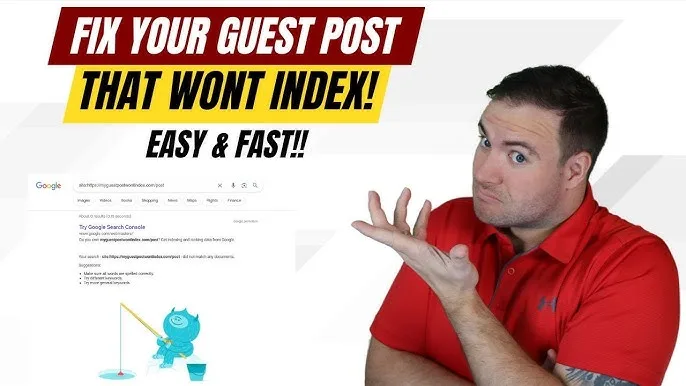
You've invested time and effort into creating quality guest posts, only to discover they've disappeared from Google's index. When you check with a site: search, the posts that were ranking just weeks ago are nowhere to be found. This frustrating situation is more common than you think and it's costing you valuable backlinks and referral traffic.
Guest post deindexing represents a serious threat to your link building strategy. Not only do you lose the SEO value of the backlink, but you've wasted resources creating content that no longer benefits anyone. This comprehensive guide explains exactly why guest posts get deindexed and provides actionable strategies to prevent it from happening to your content.
Understanding Google Deindexing
Before diving into causes and solutions, let's clarify what deindexing means and why it matters.
Deindexing occurs when Google removes pages from its search index. These pages still exist on the website they're just invisible in Google search results. When a guest post is deindexed:
- It won't appear in search results for any query
- The backlink may lose most or all of its SEO value
- Referral traffic from organic search disappears
- Your content investment provides zero return
Deindexing differs from ranking drops. A deindexed page doesn't rank poorly it doesn't rank at all. You can verify deindexing by searching Google for site:domain.com/exact-url-of-post. If nothing appears, the page is deindexed.
The 10 Main Reasons Guest Posts Get Deindexed
Understanding why deindexing happens is essential to preventing it. Here are the most common culprits.
1. The Host Website Received a Manual Penalty
When Google's spam team manually reviews a website and finds it violates guidelines, they can apply a manual penalty. This often results in massive deindexing across the entire site including all guest posts.
Common reasons websites receive manual penalties:
- Selling links or participating in link schemes
- Publishing primarily guest content with little editorial oversight
- Excessive exact-match anchor text in outbound links
- Thin or low-quality content throughout the site
- Cloaking or sneaky redirects
If your guest post was published on a penalized website, even high-quality content gets swept up in the deindexing. You can check if a site has a manual action by asking the site owner to check their Google Search Console account.
2. Low-Quality Host Website
Google's algorithms have become sophisticated at identifying low-quality websites. Even without a manual penalty, algorithmic filters can deindex content on sites that exhibit quality issues.
Red flags that signal low-quality hosts:
- Thin content (300-500 word posts with little value)
- Excessive advertisements that dominate content
- Poor user experience (intrusive popups, slow loading)
- Broken links and outdated information
- Lack of clear authorship or E-E-A-T signals
- Spammy comments or obvious bot activity
When you publish guest posts on these sites, your content inherits their quality problems in Google's eyes.
3. Duplicate or Near-Duplicate Content
Publishing the same content across multiple websites is a fast track to deindexing. Google's algorithm identifies duplicates and typically shows only the original or most authoritative version in search results.
How duplication happens:
- Syndication without proper canonicalization: Publishing your guest post on your own site and the host site
- Content spinning: Slightly rewriting the same article for multiple sites
- Plagiarism by the host: Some low-quality sites copy your guest post to other domains they control
- Guest post networks: Services that publish identical or nearly-identical content across multiple blogs
Even if you wrote original content, the host site might republish it elsewhere, causing deindexing issues.
4. Obvious Guest Post Patterns
Google has explicitly stated that large-scale guest posting for link building violates their guidelines. When websites exhibit obvious guest post patterns, algorithmic filters can deindex this content.
Patterns Google identifies:
- Author bios that are clearly SEO-focused rather than informative
- Every article on a site having a different author
- Uniform outbound link placement (every post has 2-3 links in the body)
- Generic author names or obviously fake personas
- Matching bylines across multiple unrelated websites
- Over-optimization in author bio links (exact-match anchor text)
The more your guest posts look like pure link building rather than genuine content contribution, the higher the deindexing risk.
5. Over-Optimization in the Guest Post
Even on quality websites, individual posts can be deindexed if they're obviously over-optimized for SEO rather than written for readers.
Over-optimization signals:
- Keyword stuffing throughout the content
- Unnatural anchor text in contextual links
- Multiple links to the same target page
- Links that don't add value to the reader
- Forced keyword placement in headings
- Obvious link insertion that disrupts content flow
Google's algorithms detect when content exists primarily to manipulate search rankings rather than provide genuine value.
6. The Host Website Uses Guest Posts as Link Scheme
Some websites accept guest posts specifically to sell links or participate in link networks. When Google identifies these schemes, they deindex the content.
Warning signs of link scheme sites:
- Requesting payment for guest post placement
- Accepting nearly any content regardless of quality
- Publishing dozens of guest posts per week
- Clear "sponsored" or "partner" disclosure missing
- Links to completely unrelated industries
- Generic guest post guidelines with no quality standards
Publishing on these sites not only risks deindexing it can harm your own site's reputation.
7. Thin or Low-Value Content
Even original, well-written content can be considered "thin" if it doesn't provide substantial value beyond what already exists.
What makes content thin:
- Covering topics with no unique insights or perspectives
- Superficial treatment of complex topics
- Lists without detailed explanations
- Content that's significantly shorter than competing pages
- No original research, data, or case studies
- Purely promotional rather than informative
Google increasingly favors comprehensive, in-depth content. Brief guest posts that skim the surface are more likely to be deindexed.
8. Poor Technical Implementation
Technical issues on the host website can cause deindexing even when content quality is high.
Technical problems that cause deindexing:
- Robots.txt accidentally blocking Googlebot from the guest post section
- Noindex meta tags added to guest author pages
- JavaScript rendering issues that prevent Google from seeing content
- Broken internal linking that isolates guest posts
- Server errors (500s) or extended downtime
- Redirect chains or loops affecting guest post URLs
These technical issues are outside your control but affect your guest posts nonetheless.
9. Algorithmic Updates Targeting Guest Content
Google periodically updates its algorithms to better identify and devalue manipulative link building tactics. Major updates can trigger mass deindexing of guest posts.
Particularly impactful updates include:
- Penguin updates targeting link schemes
- Helpful Content updates favoring genuine expertise
- Core updates reassessing site quality
- Link spam updates identifying unnatural links
After these updates, guest posts on borderline-quality sites often disappear from the index.
10. The Host Site Was Sold or Changed Ownership
When websites change ownership, new owners sometimes make changes that trigger deindexing:
- Switching to a different business model
- Deleting or consolidating content
- Changing URL structures without proper redirects
- Removing author attribution
- Adding aggressive advertising or affiliate links
Your guest post might be collateral damage in these transitions.
How to Check If Your Guest Posts Are Deindexed
Regular monitoring helps you catch deindexing early. Use these methods to track your guest post status.
Method 1: Site Search Operator
The most straightforward check:
- Go to Google.com
- Search: site:hostwebsite.com/your-exact-guest-post-url
- If nothing appears, the post is deindexed
Repeat this for all your guest posts monthly.
Method 2: Google Search Console (If You Have Access)
If the host site has given you Search Console access:
- Navigate to Coverage report
- Check for pages marked "Excluded"
- Review the specific exclusion reason
- Look for patterns across multiple posts
Method 3: Backlink Monitoring Tools
Tools like Ahrefs, SEMrush, and Moz track whether your backlinks remain in Google's index:
- Monitor your backlink checker regularly
- Look for backlinks marked as "lost" or "noindex"
- Verify with manual site: searches
- Track patterns of deindexing
Method 4: Google Analytics Referral Traffic
While indirect, checking referral traffic reveals deindexing:
- Review Google Analytics referral sources
- Check if traffic from guest post URLs has dropped to zero
- Correlate with timing of suspected deindexing
- Monitor organic search traffic to guest posts (if tracked)
Preventing Guest Post Deindexing: Best Practices
Prevention is far easier than recovery. Follow these practices to minimize deindexing risk.
1. Vet Host Websites Thoroughly
Before pitching a guest post, conduct thorough due diligence on the potential host site.
Quality assessment checklist:
- Domain Authority: Target DA 40+ (though DA alone isn't everything)
- Organic traffic: Use tools to verify the site receives substantial organic traffic
- Content quality: Review existing posts are they comprehensive and well-written?
- Editorial standards: Do they have clear guest post guidelines and editorial oversight?
- Link profile: Check their backlink profile for spam or manipulation
- Manual actions: Ask if they've ever received Google penalties
- Publishing frequency: Balanced ratio of original to guest content
- Audience engagement: Real comments, social shares, active readership
Sites that pass all these checks are far less likely to be deindexed.
2. Create Exceptional, Original Content
Quality content has inherent protection against deindexing. Go beyond "good enough" to create genuinely valuable resources.
Content quality standards:
- Length: Aim for 1,500-2,500+ words for comprehensive coverage
- Originality: Unique insights, not rehashed common knowledge
- Research: Include data, studies, or original experiments
- Structure: Clear organization with helpful headings and formatting
- Value: Answer questions others haven't addressed
- Accuracy: Fact-check all claims and cite sources
Learn more about creating high-quality content in our guide to writing SEO-friendly blogs.
3. Avoid Over-Optimization
Make your guest posts look like genuine contributions, not link building exercises.
Optimization dos and don'ts:
DO:
- Include 1-2 relevant, helpful links to your site
- Use natural anchor text that flows with the content
- Write primarily for the host site's audience
- Provide a genuine author bio with real credentials
- Link to other relevant resources beyond your own site
DON'T:
- Stuff keywords unnaturally
- Use exact-match anchor text repeatedly
- Include multiple links to the same page
- Create obviously templated author bios
- Force links that don't serve the reader
4. Diversify Your Link Profile
Don't put all your link building eggs in the guest posting basket. A diverse backlink profile is more resilient to algorithmic changes.
Link diversity strategies:
- Natural editorial links from high-quality content
- Industry directory listings
- Digital PR and journalist relationships
- Broken link building
- Resource page inclusions
- Genuine partnerships and collaborations
Explore our comprehensive backlink building strategies for a balanced approach.
5. Maintain Relationships with Host Sites
Building genuine relationships provides early warning of issues and opportunities for resolution.
Relationship building tactics:
- Stay in touch with editors after publication
- Share and promote your published guest posts
- Engage with the host site's content regularly
- Offer to update or expand your guest posts over time
- Alert editors to broken links or technical issues
These relationships help you learn about site changes before they affect your content.
6. Document Everything
Keep detailed records of all guest post placements to monitor performance and catch issues early.
What to document:
- Host site URL and contact information
- Publication date and post URL
- Backlinks included (anchor text and target URLs)
- Initial ranking positions
- Traffic received
- Quality metrics of the host site
- Any red flags or concerns
Use a spreadsheet or CRM to track this information systematically.
7. Monitor Host Site Quality Over Time
Websites change. A quality site today might deteriorate tomorrow. Ongoing monitoring protects your investment.
Monitoring schedule:
- Monthly: Check if guest posts remain indexed
- Quarterly: Review host site's Domain Authority and traffic
- After algorithm updates: Immediately check all guest posts
- Annually: Reassess if each guest post still provides value
Set up alerts using SEO tools to automate this monitoring.
What to Do When Guest Posts Get Deindexed
Despite your best efforts, deindexing sometimes happens. Here's how to respond effectively.
Step 1: Diagnose the Cause
Before taking action, understand why the deindexing occurred.
Diagnostic questions:
- Is it just your post, or are all guest posts deindexed?
- Is the entire host website deindexed?
- Did a Google algorithm update occur recently?
- Has the host site's quality declined?
- Are there technical issues preventing indexing?
- Did the host site receive a manual action?
The cause determines the appropriate response.
Step 2: Contact the Site Owner
Reach out to the host site's owner or editor professionally.
Effective outreach template:
Subject: Question about [Article Title] indexing
Hi [Editor Name],
I noticed that my guest post "[Article Title]" published on [date]
is no longer appearing in Google's search index.
I ran a site: search for the exact URL and it's not showing up,
though the page is still live on your site.
Have you noticed any indexing issues with other content? Is there
anything I can do on my end to help resolve this?
I'm happy to update or expand the content if that would help.
Best regards,
[Your Name]
Step 3: Evaluate if Recovery Is Worth Pursuing
Not all deindexed guest posts are worth saving. Assess the value honestly.
Questions to ask:
- Is the host site still quality and worth associating with?
- Does the guest post still drive referral traffic despite deindexing?
- Could you republish similar content on a better site?
- Is the backlink still providing any SEO value?
- Would your time be better spent on new guest posts?
Sometimes cutting losses and focusing forward is the right move.
Step 4: Request Re-Inclusion (If Appropriate)
If the host site is quality but experienced technical issues, request re-inclusion through Google Search Console.
How to request re-inclusion:
- The site owner submits a reconsideration request (if there was a manual penalty)
- Fix any technical issues preventing indexing
- Improve content quality if it was thin
- Remove any over-optimized elements
- Request recrawling in Search Console
This process can take weeks to months.
Step 5: Republish Better Content Elsewhere
If recovery isn't feasible, transform the deindexed content into a better version for a quality site.
Republishing strategy:
- Rewrite the content substantially (50%+ different)
- Target a higher-quality host website
- Add updated data, examples, or insights
- Follow all quality and optimization best practices
- Request the original host site remove or noindex the old version
This converts a loss into a better opportunity.
Step 6: Diversify Away from Guest Posting
If you're experiencing widespread guest post deindexing, it's a signal to diversify your link building approach.
Alternative link building strategies:
- Create linkable assets on your own site
- Pursue digital PR and journalist relationships
- Build tools or resources others naturally link to
- Focus on brand building and natural editorial links
- Invest in content marketing that attracts organic links
A balanced approach is more resilient to algorithm changes.
The Future of Guest Posting
Google continues refining its ability to identify manipulative link building. Understanding trends helps you stay ahead.
Guest Posting Isn't Dead But It's Evolving
Despite concerns, legitimate guest posting still works. The key is focusing on genuine contribution rather than link building.
What works in 2025 and beyond:
- Publishing on genuinely authoritative sites in your industry
- Contributing expert insights rather than promotional content
- Building relationships before pitching
- Focusing on audience benefit over SEO metrics
- Accepting that some guest posts won't include backlinks
Google's Increasing Sophistication
Algorithms now better distinguish between:
- Genuine expert contributions and link building schemes
- Quality content and thin articles
- Natural links and manipulative patterns
- Authoritative sites and link farms
This sophistication means sloppy guest posting becomes increasingly risky while quality contributions remain valuable.
The Rise of E-E-A-T in Guest Posting
Google's emphasis on Experience, Expertise, Authoritativeness, and Trustworthiness affects guest posting significantly.
E-E-A-T implications:
- Real authors with verifiable credentials perform better
- Generic or fake author personas risk deindexing
- Demonstrable expertise in your field matters
- Consistent author presence across quality publications builds trust
Learn more about E-E-A-T and its impact on content.
Measuring Guest Posting ROI Beyond Rankings
As deindexing risks increase, smart marketers track alternative success metrics.
Metrics Beyond Search Rankings
| Metric | Why It Matters | How to Track |
| Referral traffic | Direct visitors from guest posts | Google Analytics |
| Brand awareness | Mentions, searches for your brand | Google Trends, Search Console |
| Relationship value | Connections leading to opportunities | CRM tracking |
| Content repurposing | How you reuse guest content | Content calendar |
| Social shares | Engagement beyond search | Social analytics |
These metrics remain valuable even if a post gets deindexed.
Long-Term vs. Short-Term Value
Consider guest posting as a multi-benefit strategy:
Immediate benefits:
- Backlink (potentially temporary)
- Referral traffic spike
- Initial brand exposure
Long-term benefits:
- Industry relationships
- Authority building
- Content portfolio expansion
- Audience development
Even if backlinks disappear, other benefits often persist.
Professional Guest Posting vs. DIY Approaches
Managing guest posting quality and avoiding deindexing requires expertise and time.
When to Hire Professional Help
Consider professional SEO services when:
- You lack time to thoroughly vet host sites
- You've experienced deindexing and don't know why
- You want access to established, quality publisher relationships
- You need content creation expertise
- You want comprehensive link portfolio management
What Professional Services Provide
As an experienced SEO specialist, I help clients build sustainable guest posting strategies that withstand algorithm updates:
- Thorough vetting of potential host sites
- Quality content creation that adds genuine value
- Natural link placement and optimization
- Ongoing monitoring for deindexing
- Diverse link building beyond just guest posting
- Recovery strategies when deindexing occurs
Professional management significantly reduces deindexing risk while maximizing ROI.
Frequently Asked Questions
Can deindexed guest posts harm my website's rankings?
Typically, no. Deindexed guest posts simply stop providing benefit rather than actively harming you. However, if many guest posts are deindexed simultaneously because you used low-quality or spammy sites, it could signal to Google that you're involved in link schemes, which might trigger a closer review of your entire backlink profile. Focus on quality over quantity to avoid this scenario.
How long does it take for Google to reindex a guest post after issues are fixed?
After fixing technical or quality issues, reindexing typically takes 2-8 weeks, depending on how frequently Google crawls the host site. You can expedite this by requesting recrawling through Google Search Console's URL Inspection tool. However, if the deindexing was due to a manual penalty, reindexing won't occur until Google reviews and lifts the penalty, which can take several months.
Should I ask host sites to add nofollow tags to my links instead of risking deindexing?
This defeats the purpose of guest posting for SEO. If you're concerned about a site's quality, don't publish there at all. Legitimate, quality guest posts on reputable sites don't need nofollow tags. However, if you're guest posting purely for audience exposure and brand awareness (not SEO), nofollow links are perfectly fine and may actually reduce algorithmic suspicion.
Are there specific industries where guest posts get deindexed more frequently?
Yes. Industries with high commercial value and aggressive SEO competition see more deindexing: finance, health/medical, legal services, insurance, and gambling/casinos. These are also "Your Money or Your Life" (YMYL) topics where Google applies stricter quality standards. Guest posts in these industries must demonstrate exceptional expertise and be published only on highly authoritative sites to avoid deindexing.
Protect Your Guest Posting Investment
Guest post deindexing doesn't have to derail your link building strategy. By understanding the causes, vetting host sites carefully, creating exceptional content, and monitoring regularly, you can build a guest posting portfolio that withstands algorithmic changes and provides lasting value.
The key is shifting from quantity-focused link building to quality-focused content contribution. When you genuinely help host sites serve their audiences, you create value that Google wants to preserve in its index.
Get Expert Help Building Sustainable Backlinks
Navigating guest posting quality standards, avoiding deindexing, and building diverse backlink profiles requires expertise and constant vigilance. If you're tired of watching your guest posts disappear from search results, professional guidance can protect your investment.
My comprehensive backlink building service focuses on quality over quantity, leveraging relationships with genuinely authoritative sites that provide lasting SEO value. I thoroughly vet every opportunity, create content that serves readers first, and monitor ongoing to catch and address issues early.
Ready to build a backlink profile that survives algorithm updates and delivers sustainable results? Book a free consultation to discuss your link building goals and create a strategy built for longevity.
Explore my full range of SEO services including content creation, technical optimization, and penalty recovery. Check out my case studies to see how I've helped businesses build and protect their search presence.
Related Resources:
- Backlinks: Complete Guide
- How to Recover from a Google Penalty
- Content Marketing Strategy
- SEO Basics
Don't let deindexing destroy your link building efforts. Contact me today to build a guest posting strategy designed for long-term success and algorithmic resilience.

Written by Sadekur Rahman
SEO & Website Strategy Specialist at Pixelvega and SEO Executive at Daily Amar Desh. 6+ years helping brands grow with data-driven SEO.