How to Recover Traffic Lost to AI Overviews and SGE
Learn how to recover traffic lost to Google AI Overviews and SGE. Proven strategies to adapt your SEO for the AI-powered search era.

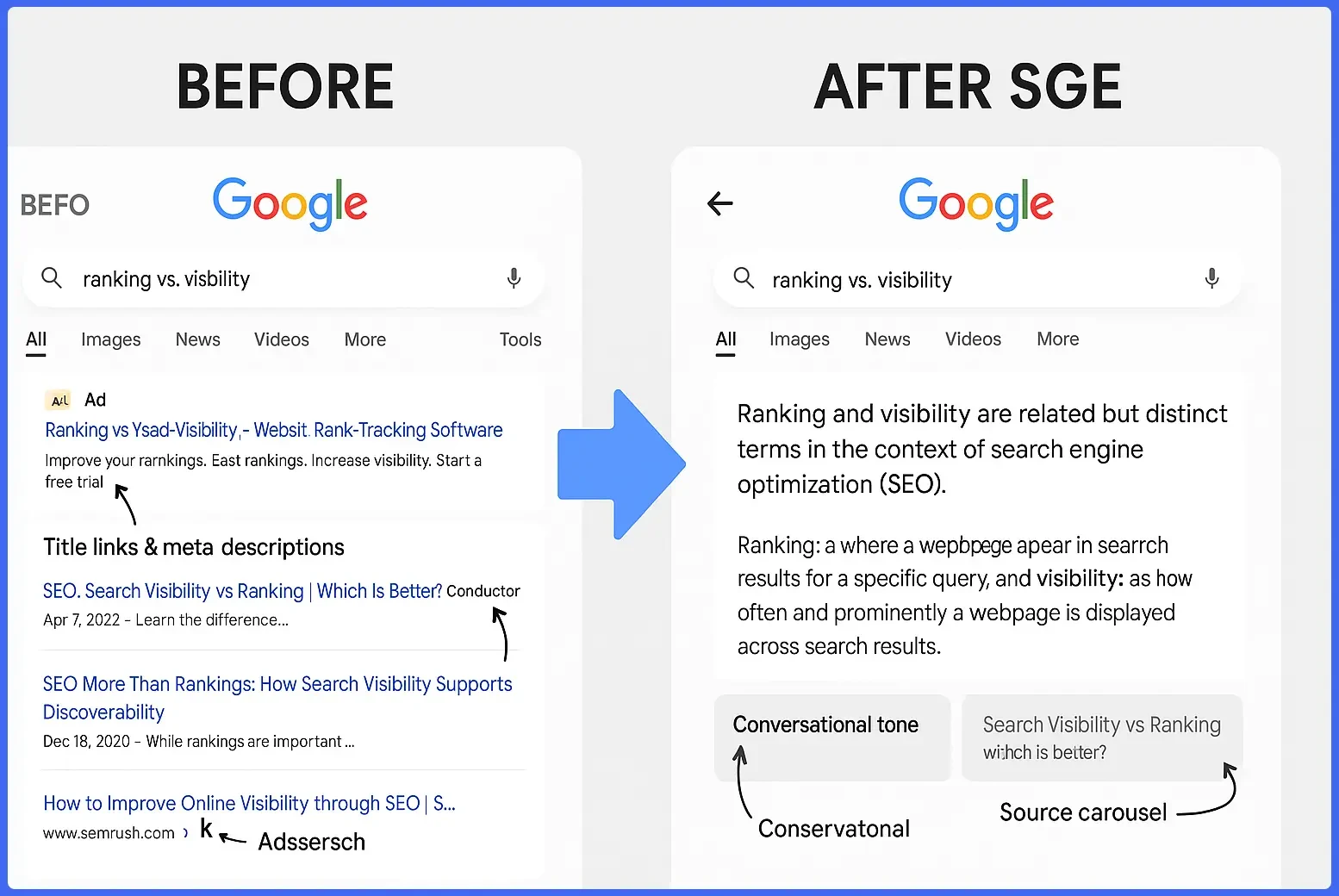
You've noticed something alarming in your analytics: organic traffic is declining despite stable rankings. Your content still appears in search results, but click-through rates have plummeted. The culprit? Google's AI Overviews (formerly Search Generative Experience or SGE) now answer user queries directly in search results, eliminating the need for many users to click through to websites.
AI Overviews represent the most significant shift in search behavior since Google's inception. These AI-generated summaries appear at the top of search results for many queries, synthesizing information from multiple sources to provide immediate answers. While this improves user experience, it fundamentally disrupts traditional SEO strategies built around capturing clicks from search results.
The question facing every website owner is no longer whether AI Overviews will impact traffic, but how to adapt SEO strategies for this new reality. Sites that treat AI-powered search as a threat will struggle, while those who strategically position themselves within AI Overviews will thrive.
In this comprehensive guide, I'll explain what AI Overviews are, how they impact organic traffic, and proven strategies to recover and grow traffic in the AI-powered search era.
What Are AI Overviews and Search Generative Experience (SGE)?
AI Overviews (previously called Search Generative Experience or SGE) are AI-generated summaries that appear at the top of Google search results, providing comprehensive answers to user queries without requiring clicks to external websites.
Key characteristics of AI Overviews:
- Appear above traditional organic results for eligible queries
- Synthesize information from multiple web sources
- Include citations linking to source content
- Feature conversational, comprehensive answers
- Show follow-up questions and related topics
- Continuously evolve as Google refines the feature
How AI Overviews differ from featured snippets:
While featured snippets extract content from a single source, AI Overviews generate original summaries by synthesizing information from multiple pages. This means even if your content appears as a cited source, users may not click through because the AI Overview answers their question completely.
Understanding how search engines work in this new AI-powered era is crucial for adapting your strategy.
How AI Overviews Impact Organic Traffic
The Zero-Click Search Problem
AI Overviews accelerate the trend toward zero-click searches queries where users find their answer directly in search results without clicking any website. Early data suggests:
Traffic impact estimates:
- Informational queries: 20-40% potential traffic loss
- Comparison queries: 15-30% traffic reduction
- How-to queries: 25-35% fewer clicks
- Product research: 10-20% impact (varies by industry)
Note: Impact varies significantly by query type, industry, and user intent. Transactional and local searches remain less affected.
Which Content Types Lose the Most Traffic
Certain content categories face higher risk from AI Overviews:
High-risk content:
- Simple definitional content
- Basic how-to guides answerable in steps
- Listicles with straightforward items
- General information queries
- Quick reference information
- Basic comparison content
Lower-risk content:
- Complex, nuanced topics requiring depth
- Personal experiences and original research
- Visual-heavy content (tutorials, galleries)
- Interactive tools and calculators
- Transactional content (product pages, services)
- Time-sensitive news and updates
Why Some Sites Appear in AI Overview Citations
Google selects citation sources based on quality signals similar to traditional ranking factors but with additional emphasis on:
- Content comprehensiveness and accuracy
- Clear, authoritative writing
- Strong E-E-A-T signals (Experience, Expertise, Authoritativeness, Trustworthiness)
- Up-to-date, well-maintained content
- Proper structured data implementation
- Page experience and technical quality
Diagnosing AI Overview Traffic Impact
Identify AI Overview Presence in Your Keywords
Determine which of your target keywords trigger AI Overviews:
Manual checking:
- Search your target keywords in Google
- Look for AI-generated summaries at top of results
- Note which queries consistently show AI Overviews
- Document whether your content appears as cited source
Tool-based tracking:
- Use rank tracking tools supporting AI Overview detection
- Monitor SERP feature changes over time
- Track citation appearances in AI Overviews
- Identify queries where you lost featured snippets to AI Overviews
Analyze Traffic Patterns
Use Google Analytics (GA4) to identify AI Overview impact:
Traffic analysis steps:
- Compare CTR over time:
- Export Search Console impression and click data
- Calculate CTR for high-impression queries
- Identify declining CTR despite stable rankings
- Correlate declines with AI Overview rollout timing
- Segment by query type:
- Group keywords by intent (informational, commercial, transactional)
- Compare traffic trends across segments
- Identify which content types lost the most traffic
- Find patterns in affected queries
- Track bounce rate and engagement:
- Monitor if traffic quality changed
- Check if remaining visitors engage deeper
- Analyze conversion rates from organic traffic
- Determine if AI Overviews filter low-intent traffic
Assess Citation Opportunities
Being cited in AI Overviews provides brand visibility even without clicks:
Citation audit:
- Identify if your content appears in AI Overview citations
- Track citation frequency across different queries
- Monitor which competitors get cited instead
- Analyze what makes cited content different
Strategic Responses to AI Overview Traffic Loss
Strategy 1: Create Content AI Overviews Can't Replace
Focus on content types that require human experience, nuance, or interaction:
Experience-driven content:
Create content demonstrating firsthand experience that AI can summarize but not replicate:
- Original case studies with specific results
- Personal experiments and testing
- Unique methodologies or frameworks
- Behind-the-scenes insights
- Authentic storytelling and narratives
Example transformation:
- Before: "How to grow tomatoes" (easily summarized by AI)
- After: "My 5-year journey growing 200+ tomato varieties: unexpected discoveries and hard-learned lessons" (personal experience AI can't replicate)
Complex, nuanced content:
Develop comprehensive resources requiring deep expertise:
- Multi-faceted analyses with expert commentary
- Contrarian or unique perspectives
- Detailed comparisons with original research
- In-depth technical guides
- Industry-specific advanced strategies
Learn to create SEO-friendly content that provides unique value beyond AI summaries.
Interactive and visual content:
Build content requiring user interaction or visual demonstration:
- Interactive calculators and tools
- Video tutorials and demonstrations
- Infographics and visual guides
- Downloadable templates and resources
- Step-by-step image galleries
Explore video content strategies for engagement beyond text-based AI summaries.
Strategy 2: Optimize to Be Cited in AI Overviews
Since citation provides brand exposure, position your content as the authoritative source:
E-E-A-T optimization:
Strengthen expertise, experience, authoritativeness, and trustworthiness signals:
- Display clear author credentials and expertise
- Include firsthand experience and examples
- Cite authoritative sources and research
- Build quality backlinks from reputable sites
- Earn industry recognition and mentions
Follow comprehensive E-E-A-T principles to establish authority.
Content structure optimization:
Format content for easy AI extraction and citation:
- Use clear, descriptive headings
- Provide direct, concise answers to questions
- Structure information logically
- Include relevant statistics and data
- Add proper schema markup
Accuracy and currency:
Maintain impeccable content quality:
- Fact-check all information thoroughly
- Update content regularly with fresh data
- Remove outdated information promptly
- Cite credible sources
- Correct errors immediately when identified
Strategy 3: Target Bottom-of-Funnel Keywords
AI Overviews impact informational queries more than commercial or transactional searches:
Focus on high-intent keywords:
Shift content strategy toward queries indicating purchase or action intent:
- Product comparison keywords
- "Best [product] for [specific use case]"
- Service + location searches
- "How to choose" and buying guide queries
- Problem-solution commercial content
Commercial content optimization:
Enhance pages targeting users ready to convert:
- Detailed product/service pages
- In-depth comparison guides
- Expert reviews and recommendations
- Pricing and feature comparisons
- Case studies demonstrating results
For e-commerce, follow these e-commerce SEO tips to optimize commercial content.
Strategy 4: Build a Recognizable Brand
Brand strength influences AI Overview citation and direct traffic:
Brand-building initiatives:
- Develop thought leadership content
- Participate actively in industry communities
- Earn media mentions and PR coverage
- Build strong social media presence
- Create memorable, shareable content
Direct traffic cultivation:
Reduce dependence on search clicks:
- Build email subscriber lists
- Create compelling content marketing campaigns
- Develop loyal audience through consistency
- Leverage social media platforms effectively
- Encourage bookmarking and direct visits
Strategy 5: Embrace Conversational and Long-Tail Keywords
AI Overviews often target conversational queries, creating opportunities in long-tail variations:
Long-tail keyword strategy:
- Target specific, niche variations of broad topics
- Focus on conversational, natural language queries
- Optimize for "best for [specific situation]" searches
- Create content answering very specific questions
- Build comprehensive resources for niche subtopics
Use keyword research tools to identify long-tail opportunities.
Question-based content:
Develop content directly answering specific user questions:
- Create detailed FAQ sections
- Build "ultimate guide" resources
- Address common pain points specifically
- Answer "why," "when," and "which" questions thoroughly
- Structure content around user intent variations
Strategy 6: Leverage Structured Data and Schema
Proper structured data helps AI understand and potentially cite your content:
Priority schema types for AI Overviews:
- Article schema with comprehensive metadata
- FAQ schema for question-based content
- How-to schema for step-by-step guides
- Product schema with detailed specifications
- Review schema showing ratings and feedback
Learn proper implementation through this schema markup guide.
Schema best practices:
- Implement all relevant schema types
- Keep schema updated with content changes
- Validate schema using Google's Rich Results Test
- Include comprehensive properties, not just required fields
- Align schema with visible page content
Advanced Adaptation Strategies
Create Content Ecosystems
Instead of isolated articles, build comprehensive content hubs:
Topic cluster approach:
- Pillar content:
- Create authoritative, comprehensive main resource
- Cover topic broadly with depth
- Link to all related cluster content
- Cluster content:
- Develop detailed pieces on specific subtopics
- Each targets specific long-tail keywords
- All link back to pillar page
- Interlink between related cluster pieces
Understanding website architecture's impact on SEO improves cluster effectiveness.
Content depth strategy:
Move beyond surface-level information:
- Publish 3,000-5,000+ word ultimate guides
- Include original research and data
- Add expert quotes and interviews
- Provide downloadable resources
- Create multi-format content (text, video, infographic)
Optimize for Featured Snippets Alongside AI Overviews
Featured snippets still appear for many queries and may influence AI Overview sources:
Snippet optimization tactics:
- Provide concise, direct answers to questions
- Use clear formatting (lists, tables, definitions)
- Structure content with question-based headers
- Include step-by-step instructions
- Create comparison tables
Follow this guide on optimizing for featured snippets.
Diversify Content Formats
AI Overviews primarily synthesize text content, creating opportunities in other formats:
Video content: Create YouTube videos and video-optimized pages that AI Overviews can't fully replace.
Podcasts and audio: Develop audio content for audiences preferring listening over reading.
Tools and calculators: Build interactive resources providing unique value beyond static information.
Original research: Conduct and publish studies generating backlinks and citations naturally.
Monitoring and Measuring Performance
Key Metrics to Track
AI Overview-specific metrics:
- Citation frequency in AI Overviews
- Click-through rate changes for high-impression queries
- Traffic from branded searches vs. generic queries
- Engagement depth from remaining organic traffic
- Conversion rates from AI-influenced traffic
Traditional metrics:
- Total organic traffic trends
- Keyword ranking positions
- Backlink acquisition rate
- Domain authority growth
- Direct and branded traffic
Use SEO tools to monitor comprehensive performance.
Create AI Overview Dashboard
Build tracking dashboard including:
- Queries showing AI Overviews
- Citation appearances and frequency
- CTR trends over time
- Traffic segment performance
- Content type effectiveness
Industry-Specific AI Overview Strategies
E-Commerce Adaptation
E-commerce sites should focus on:
- Detailed product pages with unique descriptions
- Comprehensive buying guides
- Product comparison tools
- User-generated content (reviews, Q&A)
- Visual content (product videos, galleries)
Local Business Optimization
Local SEO remains less impacted by AI Overviews:
- Optimize Google Business Profile completely
- Build local content with geographic specificity
- Earn local reviews and citations
- Create location-specific service pages
- Target "near me" and local intent queries
Specialized guides like SEO for HVAC companies provide targeted local strategies.
B2B and Service Businesses
Service providers should emphasize:
- Detailed case studies and results
- Industry-specific expertise demonstration
- Thought leadership content
- Complex problem-solving resources
- Consultation and service differentiation
Long-Term SEO Strategy in the AI Era
Embrace Quality Over Quantity
AI Overviews reward exceptional content:
- Invest in fewer, better pieces
- Update and improve existing content
- Delete or consolidate thin content
- Focus on expertise demonstration
- Prioritize user satisfaction over rankings
Build Multi-Channel Presence
Reduce search dependence:
- Develop email marketing programs
- Build active social media communities
- Create content syndication partnerships
- Invest in strategic press releases
- Cultivate direct relationships with audience
Stay Informed About AI Developments
AI-powered search evolves rapidly:
- Monitor Google announcements about AI Overviews
- Follow SEO industry news and research
- Test and experiment with new approaches
- Share learnings with SEO community
- Adapt strategies based on data
Learn about AI for SEO to leverage AI tools in your strategy.
Common Mistakes to Avoid
Trying to "Trick" AI Overviews
Manipulative tactics backfire in AI-powered search:
- Don't keyword stuff hoping for citations
- Avoid creating content solely for AI extraction
- Don't sacrifice user experience for optimization
- Resist copying AI Overview content back into pages
Abandoning Informational Content
Informational content still drives awareness and authority:
- Maintain mix of content types
- Use informational content for brand building
- Guide users toward commercial content
- Build topical authority through breadth
Neglecting Technical SEO
Technical excellence remains crucial:
- Maintain fast page speeds
- Ensure mobile optimization
- Fix crawling and indexing issues
- Implement proper schema markup
- Monitor Core Web Vitals
Use this technical SEO checklist for comprehensive coverage.
FAQ About AI Overviews and Traffic Recovery
Will AI Overviews completely eliminate organic traffic?
No, AI Overviews won't eliminate organic traffic entirely. While they reduce clicks for simple informational queries, users still click through for complex topics, commercial research, visual content, and when seeking specific sources. The key is adapting content strategy to provide value beyond simple answers that AI can generate.
How can I get my content cited in AI Overviews?
Focus on creating high-quality, authoritative content with strong E-E-A-T signals. Include accurate information, cite credible sources, maintain up-to-date content, implement proper schema markup, and build authoritative backlinks. Being cited provides brand exposure even when users don't click through.
Should I stop creating informational content?
No, informational content remains valuable for brand awareness, topical authority, and attracting users at different funnel stages. Instead of abandoning it, create informational content that's more comprehensive, experience-driven, and valuable than AI-generated summaries. Balance informational with commercial content targeting higher-intent queries.
How long will it take to recover traffic lost to AI Overviews?
Recovery timelines vary based on your adaptation strategy. Sites pivoting to high-intent keywords and creating irreplaceable content may see stabilization within 3-6 months. However, some traffic lost to AI Overviews may not fully return the goal is maintaining overall business growth through adaptation rather than expecting complete traffic recovery.
Conclusion: Thrive in the AI-Powered Search Era
AI Overviews represent a fundamental shift in how users interact with search results, but they don't signal the end of SEO they demand evolution. Sites that provide genuine value beyond simple answers will continue thriving, while those relying on basic informational content will struggle.
Your AI Overview adaptation action plan:
- Audit content to identify AI Overview vulnerability
- Create irreplaceable content based on experience and expertise
- Optimize for citations to gain brand exposure
- Target high-intent keywords less affected by AI summaries
- Build brand recognition reducing search dependence
- Diversify content formats beyond text AI can summarize
- Monitor and adapt based on performance data
Remember that successful SEO has always been about serving users better than competitors. AI Overviews raise the bar for content quality, but the fundamental principle remains: create genuinely valuable, differentiated content that users can't find elsewhere.
If you're struggling with traffic loss from AI Overviews or need expert guidance adapting your SEO strategy, I'm here to help. Book a meeting to discuss your specific challenges and develop a customized adaptation strategy. Explore my SEO service packages and pricing plans, or review my case studies to see proven results in the evolving search landscape.
Ready to adapt your SEO for AI-powered search? Contact me today for comprehensive SEO support that positions your site for success in the AI era.

Written by Sadekur Rahman
SEO & Website Strategy Specialist at Pixelvega and SEO Executive at Daily Amar Desh. 6+ years helping brands grow with data-driven SEO.