Why Do I Get Traffic But No Conversions? CRO Solutions
Getting traffic but no sales? Discover proven CRO optimization strategies to fix low conversion rates and turn visitors into customers. Actionable solutions inside.

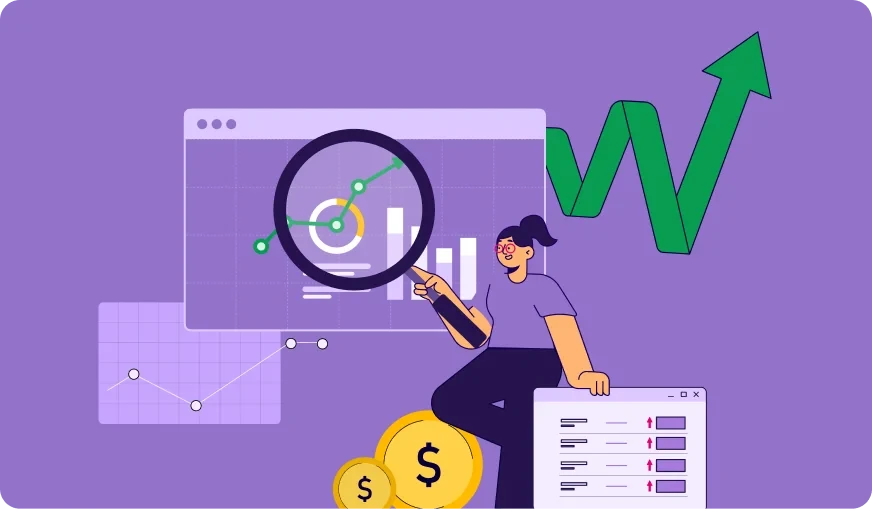
You're getting the traffic you worked so hard for. Your SEO efforts paid off thousands of visitors landing on your site each month. But here's the frustrating reality: they're not converting. No sales, no sign-ups, no leads. Just bounce after bounce.
This is one of the most common and disheartening problems in digital marketing. You've won half the battle by attracting visitors, but without conversions, that traffic is essentially worthless. The good news? Low conversion rates are fixable through systematic conversion rate optimization (CRO).
In this comprehensive guide, I'll show you exactly why visitors aren't converting and provide actionable CRO solutions to transform your traffic into revenue. Whether you're getting 100 visitors or 100,000, these strategies will help you maximize the value of every single one.
Understanding Conversion Rate Optimization (CRO)
What Is Conversion Rate Optimization?
Conversion rate optimization is the systematic process of increasing the percentage of website visitors who complete a desired action whether that's making a purchase, filling out a form, signing up for a newsletter, or downloading a resource.
The basic formula: Conversion Rate = (Conversions ÷ Total Visitors) × 100
For example, if you get 1,000 visitors and 20 conversions, your conversion rate is 2%.
Why Conversions Matter More Than Traffic
Many businesses obsess over traffic numbers while ignoring conversion rates. This is backwards thinking:
Traffic vs. Conversions comparison:
| Metric | Site A | Site B |
| Monthly Visitors | 10,000 | 5,000 |
| Conversion Rate | 1% | 4% |
| Monthly Conversions | 100 | 200 |
| Average Order Value | $50 | $50 |
| Monthly Revenue | $5,000 | $10,000 |
Site B generates twice the revenue with half the traffic because of superior conversion optimization. This is why CRO optimization should be a priority alongside SEO efforts.
Average Conversion Rates by Industry
Understanding benchmarks helps you assess your performance:
- Ecommerce: 2-3% average
- B2B services: 2-5% average
- SaaS products: 3-5% average
- Lead generation: 5-10% average
- Local services: 10-15% average
If you're significantly below these benchmarks, you have substantial room for improvement through strategic ecommerce SEO and CRO efforts.
Common Reasons You're Getting Traffic Without Conversions
Reason 1: Wrong Traffic Quality
Not all traffic is created equal. You might be attracting visitors who were never likely to convert.
Signs of low-quality traffic:
- High bounce rates (70%+ leaving immediately)
- Very short session durations (under 30 seconds)
- Low pages per session (1-2 pages)
- Traffic from irrelevant keywords
- Visitors from geographic locations you don't serve
Common causes:
- Ranking for informational keywords when you sell products
- Broad match keywords attracting wrong audience
- Clickbait content that doesn't align with your offerings
- Poor keyword intent matching in your SEO strategy
Solution: Audit your keyword targeting. Focus on commercial and transactional intent keywords that indicate buying readiness. Use your analytics to identify which traffic sources and keywords actually convert, then optimize for more of those.
Reason 2: Value Proposition Isn't Clear
Visitors should understand what you offer and why it matters within 3 seconds of landing on your page.
Value proposition problems:
- Generic, vague messaging that could apply to any company
- Features listed without clear benefits
- No differentiation from competitors
- Buried or missing unique selling points
- Confusing or technical jargon
Example of weak vs. strong value proposition:
❌ Weak: "We provide comprehensive digital marketing solutions for businesses."
✅ Strong: "Increase your organic traffic by 200% in 90 days with data-driven SEO strategies or get your money back."
Solution: Craft a clear, compelling value proposition that immediately communicates what you do, who you help, and why you're different. Place it prominently above the fold on every key landing page.
Reason 3: Poor Page Load Speed
Every second of load time kills conversions. Research shows:
- 1-3 seconds: Optimal conversion rates
- 4-6 seconds: 20% conversion drop
- 7-10 seconds: 50%+ conversion drop
- 10+ seconds: Most visitors abandon
Common speed issues:
- Unoptimized images (too large, wrong formats)
- Excessive JavaScript and CSS
- Slow server response times
- Too many third-party scripts
- No caching or CDN implementation
Solution: Optimize your site speed targeting Core Web Vitals standards. Use my technical SEO checklist to systematically improve page load performance.
Reason 4: Confusing or Complicated User Experience
If visitors can't easily find what they need or understand how to take action, they won't convert.
UX problems that kill conversions:
- Cluttered, overwhelming page layouts
- Navigation that's hard to understand
- Hidden or unclear calls-to-action
- Too many choices creating decision paralysis
- Multi-step processes that should be simpler
- Poor mobile experience
Solution: Simplify everything. Remove unnecessary elements, clarify navigation, make CTAs obvious, reduce form fields, and streamline the conversion path to as few steps as possible.
Reason 5: Weak or Missing Calls-to-Action
Your CTA is the critical moment where browsers become buyers. Weak CTAs leave money on the table.
CTA mistakes:
- Generic text like "Submit" or "Click Here"
- Multiple competing CTAs confusing users
- CTAs buried below the fold
- No visual distinction from other elements
- Unclear what happens after clicking
Effective CTA characteristics:
- Action-oriented language (Get, Start, Discover)
- Specific benefit ("Get My Free Quote" not just "Submit")
- High visual contrast and prominence
- Strategic placement (multiple times on long pages)
- Urgency or scarcity elements when appropriate
Solution: Redesign CTAs with compelling copy, strong visual prominence, and strategic placement. Test different variations to find what resonates with your audience.
Reason 6: Lack of Trust Signals
Online shoppers are skeptical. Without trust signals, they assume risk and choose not to convert.
Essential trust elements:
- Customer testimonials and reviews
- Security badges (SSL, payment processor logos)
- Money-back guarantees or warranties
- Professional design and branding
- About page with real people and company info
- Contact information readily available
- Industry certifications or awards
- Social proof (client logos, case studies)
Solution: Add trust elements strategically throughout your site, especially near conversion points. Include real customer testimonials with photos, display security badges at checkout, and showcase case studies. Learn more about building E-E-A-T signals for credibility.
Reason 7: Pricing or Cost Concerns
If visitors can't find pricing information or perceive your offering as too expensive, they won't convert.
Pricing problems:
- Hidden pricing forcing contact before quote
- Prices that shock compared to expectations
- No payment options or financing available
- Unclear what's included for the price
- Competitors offering better perceived value
Solution: Be transparent about pricing when possible. If you must hide specific prices (custom quotes), explain why and make the inquiry process simple. Address price objections with clear value communication, comparison tables showing what's included, and payment options that reduce friction.
Reason 8: Forms That Are Too Long or Complicated
Every additional form field reduces conversion rates. Asking too much too soon kills momentum.
Form optimization principles:
- Only ask for essential information
- Use one column layouts (easier to scan)
- Provide clear field labels and helpful hints
- Show progress indicators for multi-step forms
- Pre-fill information when possible
- Eliminate unnecessary required fields
- Use smart defaults and autofill
Solution: Audit every form on your site. Remove non-essential fields ruthlessly. For longer forms, use multi-step formats with progress indicators. Test different versions to find the optimal length.
Reason 9: Poor Mobile Experience
With 60%+ of traffic coming from mobile devices, mobile optimization isn't optional.
Mobile conversion killers:
- Text too small to read
- Buttons too small to tap accurately
- Horizontal scrolling required
- Pop-ups blocking content
- Slow mobile load speeds
- Forms difficult to complete on mobile
- Mobile redirects to separate sites
Solution: Implement responsive design with mobile-first thinking. Test your site on actual mobile devices, not just desktop simulators. Ensure touch targets are 44×44 pixels minimum, text is readable without zooming, and checkout works seamlessly on smartphones.
Reason 10: Content Doesn't Match Search Intent
Visitors arrived looking for specific information or solutions. If your content doesn't deliver what they expected, they leave.
Intent mismatches:
- Ranking for "how to" queries but showing product pages
- Attracting researchers when you need buyers
- Educational content without conversion paths
- Generic content not addressing specific pain points
Solution: Align content with search intent. Create different content for different stages of the buyer journey. Educational content should lead naturally to commercial pages. Product pages should anticipate and answer objections. Use effective content writing strategies that guide visitors toward conversion.
Proven CRO Solutions to Increase Conversions
Solution 1: Implement Strategic A/B Testing
Stop guessing start testing what actually improves conversions.
What to A/B test:
- Headlines and value propositions
- CTA button colors, text, and placement
- Page layouts and element positioning
- Form length and field requirements
- Pricing presentation and structure
- Images and video placement
- Copy length and messaging
Testing best practices:
- Test one element at a time for clear attribution
- Run tests until statistical significance (typically 1,000+ conversions per variation)
- Test high-traffic pages first for faster results
- Document all tests and learnings
- Implement winners and continue testing
Tools for A/B testing:
- Google Optimize (free)
- Optimizely
- VWO (Visual Website Optimizer)
- Convert
- Crazy Egg
Solution 2: Optimize Your Landing Pages
Landing pages have one job: convert visitors. Optimize them relentlessly.
Landing page optimization checklist:
Above the fold:
- Clear, compelling headline
- Subheadline explaining the benefit
- Eye-catching hero image or video
- Prominent CTA button
- Trust signals (reviews, badges, guarantees)
Body content:
- Benefits-focused copy (not just features)
- Social proof and testimonials
- Problem-solution-benefit structure
- Visual elements breaking up text
- Address common objections
Conversion area:
- Simplified form or clear next step
- Strong final CTA
- Risk reversal (guarantees, free trials)
- Urgency or scarcity elements (when genuine)
Technical optimization:
- Fast load speed (under 3 seconds)
- Mobile-responsive design
- No distracting navigation away from conversion
- Single focused goal per page
Learn more about optimizing product pages for both search and conversion.
Solution 3: Reduce Friction Throughout the Conversion Path
Every unnecessary click, field, or decision point costs you conversions.
Friction reduction tactics:
Simplify navigation:
- Clear, logical menu structure
- Breadcrumbs showing user location
- Search functionality for large sites
- Prominent "Contact" and "Cart" buttons
Streamline checkout:
- Guest checkout option (don't force account creation)
- Progress indicators showing steps
- Save information between steps
- Multiple payment options
- One-page checkout when possible
Minimize required actions:
- Reduce form fields to bare minimum
- Use social login options
- Pre-fill known information
- Eliminate unnecessary confirmation pages
- Auto-save progress in forms
Remove uncertainty:
- Clear shipping costs upfront
- Estimated delivery dates
- Return policy easily accessible
- Security assurances at every step
For ecommerce sites specifically, implement these ecommerce SEO tips alongside CRO optimization.
Solution 4: Leverage Social Proof Strategically
People trust other people more than they trust companies. Use that.
Types of social proof to implement:
Customer testimonials:
- Include real names and photos
- Specific results and details (not generic praise)
- Video testimonials for higher impact
- Match testimonials to page context
Review ratings:
- Display aggregate ratings prominently
- Show recent reviews
- Include both positive and constructive feedback for authenticity
- Use structured data for star ratings in search results
Case studies:
- Detailed before-and-after stories
- Quantified results and outcomes
- Industry-specific examples
- Visual elements (charts, screenshots)
Trust badges:
- Industry certifications and memberships
- Security certifications (SSL, McAfee, Norton)
- Payment processor logos
- Award badges and recognition
- "As seen in" media mentions
Real-time social proof:
- "X people viewing this now"
- "Y customers purchased in last 24 hours"
- Recent customer activity notifications
- Live chat with real support staff
Check out my case studies for examples of successful conversion optimization implementations.
Solution 5: Optimize Your Copy for Persuasion
Words matter. The right copy transforms browsers into buyers.
Persuasive copywriting principles:
Focus on benefits, not features:
- Feature: "24/7 customer support"
- Benefit: "Get help whenever you need it even at 3 AM"
Use power words:
- You/Your (makes it personal)
- Free (removes risk)
- New (triggers curiosity)
- Proven (builds confidence)
- Guaranteed (reduces risk)
Address objections directly:
- "Worried about setup? We handle everything for you."
- "Not sure if it's right for you? Try it free for 14 days."
- "Concerned about security? We use bank-level encryption."
Create urgency (authentically):
- Limited-time offers with countdown timers
- Low stock warnings
- Seasonal opportunities
- Early-bird pricing
Use active, action-oriented language:
- "Start your free trial" not "Free trial available"
- "Get instant access" not "Access is available"
- "Book your consultation" not "Consultation booking"
Learn more about persuasive copywriting techniques.
Solution 6: Implement Exit-Intent Popups
Capture visitors before they leave with strategic exit-intent offers.
Effective exit-intent strategies:
Discount offers:
- First-time visitor discounts
- Cart abandonment recovery offers
- "One more chance" deals
Lead magnets:
- Free guides or ebooks
- Checklists and templates
- Email courses
- Webinar invitations
Survey or feedback:
- "Why are you leaving?" questions
- Feedback forms offering incentives
- Alternative options or solutions
Best practices:
- Make offers genuinely valuable
- Keep design simple and uncluttered
- Easy close button (don't trap users)
- Mobile-friendly overlays
- Don't show on every page or too frequently
Solution 7: Use Video to Increase Engagement
Video content can increase conversions by 80% or more when used strategically.
Where to use video:
Product demos:
- Show products in action
- Highlight key features and benefits
- Address common questions
- Keep under 2 minutes
Explainer videos:
- Simplify complex offerings
- Tell your brand story
- Explain processes or methodologies
- Use animation for abstract concepts
Customer testimonials:
- Real customers sharing experiences
- Before-and-after demonstrations
- Specific results achieved
- Authentic, unscripted feel
Video optimization tips:
- Auto-play muted (let users choose audio)
- Add captions for silent viewing
- Optimize for mobile viewing
- Fast loading with proper compression
- Clear CTA at video end
Learn about creating effective video content for conversions.
Solution 8: Optimize for Micro-Conversions
Not every visitor is ready to buy. Capture micro-conversions that lead to sales.
Micro-conversion examples:
- Newsletter sign-ups
- Free trial registrations
- Demo requests
- Resource downloads
- Quiz or assessment completions
- Social media follows
- Account creation
Why micro-conversions matter:
- Build relationship before asking for sale
- Capture contact information for remarketing
- Qualify leads through engagement
- Provide value while building trust
- Create multiple conversion opportunities
Implementation:
- Offer valuable content in exchange for email
- Use lead magnets aligned with your offerings
- Create progressive engagement sequences
- Nurture leads with email automation
- Track micro-conversion paths to sales
Solution 9: Create Urgency and Scarcity (Authentically)
Genuine urgency motivates action. Fake urgency destroys trust.
Authentic urgency tactics:
Limited time offers:
- Flash sales with real end dates
- Seasonal promotions
- Early-bird pricing
- Launch pricing windows
Limited quantity:
- Low stock indicators (when true)
- Limited edition products
- Enrollment caps for courses or services
- First X customers bonuses
Time-based incentives:
- "Order within 2 hours for same-day shipping"
- "Book this week and save 15%"
- "Free upgrade for January sign-ups"
What NOT to do:
- Fake countdown timers that reset
- "Only 1 left" when it's not true
- Perpetual "sale" pricing
- Artificial scarcity
Solution 10: Implement Live Chat Support
Real-time assistance can increase conversions by 40%+ for high-consideration purchases.
Live chat best practices:
Strategic placement:
- Available on product and pricing pages
- Proactive triggers on exit intent
- Prominent but not intrusive
- Mobile-friendly implementation
Response requirements:
- Human responses within 30 seconds
- Well-trained chat operators
- Ability to handle objections
- Authority to offer deals if needed
Automation opportunities:
- Chatbots for common questions
- After-hours automated responses
- FAQ integration
- Escalation to humans when needed
Alternatives to live chat:
- Comprehensive FAQ sections
- Click-to-call buttons
- Scheduled callback options
- Email support with fast response times
Real-World CRO Success Story
The Challenge: A B2B SaaS client was getting 15,000 monthly visitors but only converting at 0.8% (120 trial sign-ups per month). Industry average was 3-5%, meaning they were leaving thousands of potential customers on the table.
The Diagnosis: Through analytics and user testing, we identified key issues:
- Value proposition was unclear and generic
- Pricing page hidden behind contact form
- Sign-up process required 14 form fields
- No social proof or testimonials on landing pages
- Mobile experience was poor (60% of traffic was mobile)
- Page load time averaged 6.2 seconds
The CRO Solutions Implemented:
- Clarified value proposition: Rewrote homepage headline focusing on specific benefit and quantifiable outcome
- Simplified sign-up: Reduced form from 14 to 4 fields (name, email, company, role)
- Added social proof: Added customer testimonials with logos, results, and photos to all landing pages
- Made pricing transparent: Created clear pricing page accessible from navigation
- Improved mobile UX: Redesigned mobile experience with thumb-friendly navigation and streamlined forms
- Optimized page speed: Reduced load time to 2.1 seconds through image optimization and code cleanup
- Implemented exit-intent: Added exit popup offering free trial extension to abandoners
- A/B tested CTAs: Tested button colors, copy, and placement (winning variation increased clicks 34%)
The Results (After 12 Weeks):
- Conversion rate increased from 0.8% to 3.4% (325% improvement)
- Monthly trial sign-ups grew from 120 to 510
- Average deal size remained constant at $3,000/year
- Projected annual revenue increase: $1.17 million
- No increase in traffic required just better conversion optimization
This demonstrates the massive ROI potential of strategic CRO work. Similar improvements are achievable through comprehensive CRO optimization services that combine analytics, testing, and user experience design.
Tools for Conversion Rate Optimization
Analytics and Testing Tools
- Google Analytics: Traffic behavior and conversion tracking
- Hotjar: Heatmaps, session recordings, user feedback
- Google Optimize: Free A/B testing platform
- Crazy Egg: Visual analytics and user testing
- Optimizely: Advanced A/B testing and personalization
User Feedback Tools
- UsabilityHub: Quick user testing and feedback
- UserTesting: Video recordings of users navigating your site
- Qualaroo: On-site survey and feedback collection
- SurveyMonkey: Detailed customer surveys
Monitoring Tools
- Google Search Console: Search performance data
- PageSpeed Insights: Performance optimization
- GTmetrix: Speed and performance tracking
Explore more options in my comprehensive SEO tools guide.
Why Professional CRO Services Deliver Better Results
Conversion rate optimization requires expertise in psychology, design, analytics, and testing methodology. While basic improvements can be made independently, professional CRO services deliver significantly better results through:
Expert advantages:
- Experience identifying hidden conversion barriers
- Proper test design avoiding false conclusions
- Access to premium tools and technologies
- Understanding of psychology and persuasion principles
- Ability to implement complex technical optimizations
- Ongoing optimization rather than one-time fixes
As an experienced specialist in both SEO and CRO optimization, I help businesses maximize the value of their traffic through systematic conversion improvement. Whether you need comprehensive site-wide optimization or targeted landing page fixes, I can develop strategies that turn more visitors into customers.
Frequently Asked Questions About Conversions and CRO
What is a good conversion rate?
"Good" varies by industry and business model, but generally 2-5% is average for most websites. Ecommerce typically sees 2-3%, while lead generation might see 5-10%. However, the real question isn't whether your rate is "good" but whether it can be improved. Even sites with 10% conversion rates can often increase to 12-15% through optimization, which represents significant revenue growth.
How long does it take to see CRO results?
Basic improvements (speed optimization, form simplification, clearer CTAs) can show results within days or weeks. Comprehensive optimization with proper A/B testing typically takes 2-4 months to show meaningful improvements. The key is consistent testing and iteration rather than expecting overnight transformation.
Should I focus on traffic or conversions first?
If your conversion rate is below industry averages, focus there first. Doubling your conversion rate from 1% to 2% has the same effect as doubling your traffic, but it's often easier and cheaper. Once you're converting well, scaling traffic makes sense. The ideal approach combines both improving conversions while steadily growing traffic.
How much should I invest in CRO?
As a general rule, allocate 10-20% of your digital marketing budget to CRO. If you're spending $10,000/month driving traffic, invest $1,000-2,000 in optimizing conversions. The ROI on CRO typically exceeds traffic acquisition because you're getting more value from existing visitors rather than constantly needing new ones.
Can I do CRO myself or should I hire an expert?
Basic CRO improvements (faster pages, clearer CTAs, simpler forms) can be done independently. However, sophisticated optimization involving proper testing, advanced analytics, and complex implementations typically requires expertise. Consider hiring professionals when conversion improvements would significantly impact revenue, or when you've exhausted obvious optimizations without achieving desired results.
Take Action on Your Conversion Rate Today
Traffic without conversions is wasted opportunity. Every visitor who leaves without converting represents lost revenue that you'll never recover. The good news is that conversion optimization is entirely under your control unlike traffic, which depends partly on Google's algorithms.
Start with the low-hanging fruit: clarify your value proposition, simplify your forms, add trust signals, and optimize page speed. Then move to more sophisticated strategies like A/B testing, psychological persuasion, and advanced user experience optimization.
Ready to transform your traffic into revenue? I offer comprehensive CRO optimization services that combine analytics, testing, and strategic design to maximize conversions. Whether you need landing page optimization, checkout improvements, or full-site conversion audits, I can help you get more value from every visitor.
Schedule a free consultation to discuss your conversion challenges and get expert analysis of optimization opportunities, or explore my service packages for comprehensive conversion rate optimization.
Don't let another visitor leave without converting take action today to turn your traffic into tangible business results.
About the Author: Sadekur Rahman is an SEO and CRO specialist with extensive experience optimizing websites for both traffic and conversions. With expertise in user experience design, A/B testing, and conversion psychology, Sadekur has helped numerous businesses dramatically increase their conversion rates and revenue. View case studies of successful CRO transformations or learn more about optimization services.

Written by Sadekur Rahman
SEO & Website Strategy Specialist at Pixelvega and SEO Executive at Daily Amar Desh. 6+ years helping brands grow with data-driven SEO.