How Search Engines Work and Their Impact on SEO
Explore how search engines work and their impact on SEO. Learn key strategies to optimize your site for better rankings with expert insights from Sadekur Rahman.

Introduction to Search Engines and SEO
Search engines are the backbone of the internet, helping users find relevant information among billions of web pages. Understanding how they operate is crucial for effective search engine optimization (SEO), which enhances a website's visibility and drives organic traffic. As an SEO specialist, I’ve helped numerous businesses improve their rankings by aligning their strategies with search engine algorithms. This article explores the mechanics of search engines, their impact on SEO, and actionable strategies to optimize your website.
What Are Search Engines?
Search engines are complex systems that index, rank, and deliver web content based on user queries. Google, Bing, and Yahoo are prominent examples, with Google commanding over 90% of the global search market share (Statista, 2024).
Why Understanding Search Engines Matters for SEO
SEO is about making your website appealing to search engines so it ranks higher for relevant queries. By understanding their algorithms and ranking factors, you can craft strategies that boost visibility, attract targeted traffic, and increase conversions.
Ready to improve your website’s rankings? Book a meeting with me to discuss tailored SEO strategies.
How Search Engines Work
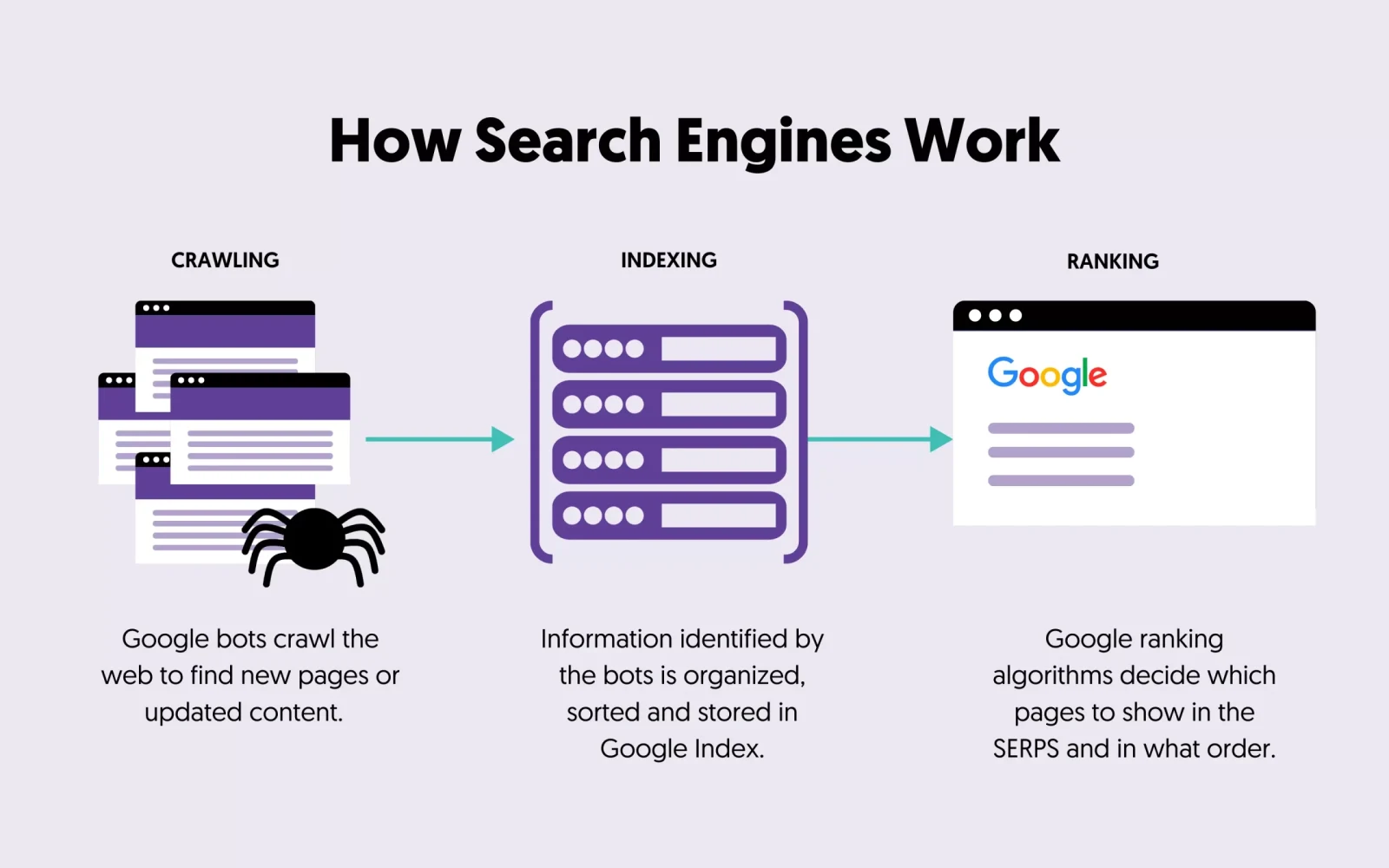
Search engines operate through three core processes: crawling, indexing, and ranking. Each plays a vital role in delivering relevant results to users.
Crawling: Discovering Web Content
Crawling is the process where search engines use bots (e.g., Googlebot) to discover new and updated web pages.
- How It Works: Bots follow links from known pages to new ones, systematically exploring the web.
- Key Factors: Sitemaps, internal links, and external backlinks guide crawlers to your content.
- SEO Tip: Ensure your site has a clear structure and an XML sitemap to facilitate crawling.
Need help optimizing your site structure? Check out my SEO services for expert guidance.
Indexing: Storing and Organizing Data
Once crawled, pages are stored in a massive database called an index.
- How It Works: Search engines analyze page content, metadata, and structure to categorize it.
- Key Factors: Clean code, relevant keywords, and mobile-friendliness improve indexability.
- SEO Tip: Use descriptive meta tags and structured data to enhance indexing accuracy.
Ranking: Delivering Relevant Results
Ranking determines the order in which pages appear in search results based on user queries.
- How It Works: Algorithms assess relevance and authority using hundreds of signals, such as keywords, backlinks, and user experience.
- Key Factors: Content quality, site speed, and mobile optimization heavily influence rankings.
- SEO Tip: Focus on high-quality, user-focused content to align with ranking algorithms.
External Link: Learn more about Google’s ranking factors in their Search Quality Evaluator Guidelines.
The Impact of Search Engines on SEO
Search engine algorithms directly shape SEO strategies. Updates like Google’s Core Web Vitals or BERT emphasize user experience and semantic understanding, pushing SEO professionals to adapt.
Algorithm Updates and Their Effects
- Google’s Panda (2011): Penalized low-quality content, emphasizing originality and depth.
- RankBrain (2015): Introduced machine learning to better understand user intent.
- Core Web Vitals (2021): Prioritized page speed, interactivity, and visual stability.
SEO Tip: Stay updated on algorithm changes to align your strategy with current best practices.
User Intent and Semantic Search
Modern search engines prioritize user intent, analyzing queries to deliver results that match searcher goals (informational, navigational, or transactional).
- Semantic Search: Algorithms like BERT interpret context, not just keywords.
- SEO Impact: Optimize for long-tail keywords and question-based queries to target specific intents.
External Link: Moz’s guide on semantic search explains how to optimize for intent.
Mobile-First Indexing
Since 2019, Google has prioritized mobile versions of websites for indexing and ranking.
- Why It Matters: Over 60% of searches occur on mobile devices (StatCounter, 2025).
- SEO Tip: Use responsive design and test mobile usability with Google’s Mobile-Friendly Test.
Key SEO Strategies to Align with Search Engines
To rank well, your SEO strategy must align with how search engines evaluate and rank content. Below are proven tactics to optimize your site.
On-Page SEO: Optimizing Content and Structure
On-page SEO involves optimizing elements within your website.
- Keyword Research: Use tools like Ahrefs or SEMrush to find relevant keywords.
- Content Quality: Write in-depth, original content that answers user queries.
- Meta Tags: Craft compelling title tags (60–70 characters) and meta descriptions (150–160 characters).
- Headings: Use H1 for titles and H2/H3 for subheadings to improve readability and structure.
On-Page SEO Checklist
| Element | Best Practice | Tool to Use |
| Title Tag | Include primary keyword, under 70 characters | Yoast SEO |
| Meta Description | Summarize content, include keywords | SEMrush |
| Headings | Use H1, H2, H3 for hierarchy | Screaming Frog |
| Content | 1000+ words, original, user-focused | Grammarly |
Technical SEO: Enhancing Site Performance
Technical SEO ensures your site is accessible and efficient for search engines.
- Site Speed: Aim for under 2 seconds load time (Google PageSpeed Insights).
- Mobile Optimization: Use responsive design and test with Google’s Mobile-Friendly Test.
- XML Sitemap: Submit an updated sitemap via Google Search Console.
- SSL/HTTPS: Secure your site to boost trust and rankings.
CTA: Want a technical SEO audit? Visit my services page to get started.
Off-Page SEO: Building Authority
Off-page SEO focuses on external factors like backlinks and social signals.
- Backlinks: Earn high-quality links from authoritative sites.
- Social Media: Share content to drive traffic and engagement.
- Guest Posts: Contribute to reputable blogs to build authority.
SEO Tip: Use tools like Moz or Ahrefs to monitor backlink profiles.
Content Optimization for Featured Snippets
Featured snippets appear at the top of search results, answering queries directly.
- How to Optimize:
- Answer questions concisely in 40–60 words.
- Use bullet points, tables, or numbered lists.
- Target question-based keywords (e.g., “how do search engines work?”).
Example: To rank for “What is SEO?”, provide a clear definition: SEO (Search Engine Optimization) is the process of improving a website’s visibility on search engines to drive organic traffic.
Common SEO Tools and Their Features
SEO tools help analyze performance and identify optimization opportunities.
Popular SEO Tools Comparison
| Tool | Key Features | Best For | Pricing |
| Ahrefs | Keyword research, backlink analysis | Comprehensive SEO | Starts at $99/mo |
| SEMrush | Competitor analysis, site audits | All-in-one marketing | Starts at $119/mo |
| Yoast SEO | On-page optimization, readability analysis | WordPress users | Free, premium $99/yr |
| Google Search Console | Performance tracking, crawl errors | Free SEO insights | Free |
Need help choosing the right SEO tools? Contact me for personalized recommendations.
Measuring SEO Success
Track key performance indicators (KPIs) to evaluate your SEO efforts.
- Organic Traffic: Monitor via Google Analytics.
- Keyword Rankings: Use tools like SEMrush or Ahrefs.
- Conversion Rates: Track goals like form submissions or purchases.
- Bounce Rate: Aim for under 50% to indicate user engagement.
See how I’ve helped businesses succeed with SEO. Explore my case studies for real results.
Common Questions About Search Engines and SEO
How Do Search Engines Work?
Search engines crawl websites, index content, and rank pages based on relevance and authority, using algorithms to deliver the best results for user queries.
Why Is SEO Important for Businesses?
SEO increases organic traffic, improves visibility, and drives conversions, helping businesses reach their target audience without relying solely on paid ads.
How Long Does SEO Take to Show Results?
SEO typically takes 3–6 months to show significant results, depending on competition, keyword difficulty, and site optimization.
What Are the Most Important SEO Ranking Factors?
Key factors include content quality, backlinks, site speed, mobile optimization, and user experience metrics like Core Web Vitals.
Mastering SEO for Search Engine Success
Understanding how search engines work is the foundation of effective SEO. By optimizing for crawling, indexing, and ranking, and aligning with user intent, you can boost your website’s visibility and drive meaningful traffic. Implement the strategies outlined on-page, technical, and off-page SEO while tracking performance with the right tools.
Ready to elevate your SEO game? Explore my plans and pricing or book a meeting to create a customized strategy for your business.

Written by Sadekur Rahman
SEO & Website Strategy Specialist at Pixelvega and SEO Executive at Daily Amar Desh. 6+ years helping brands grow with data-driven SEO.